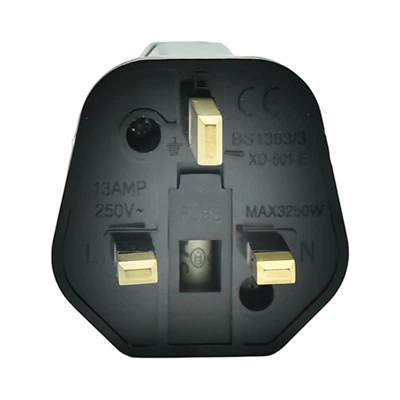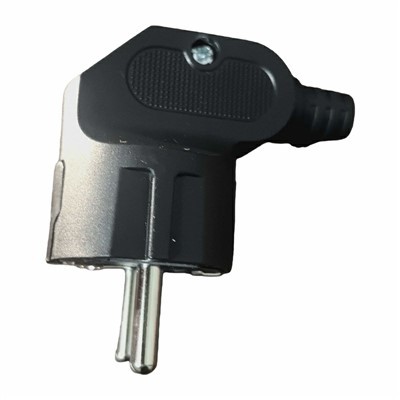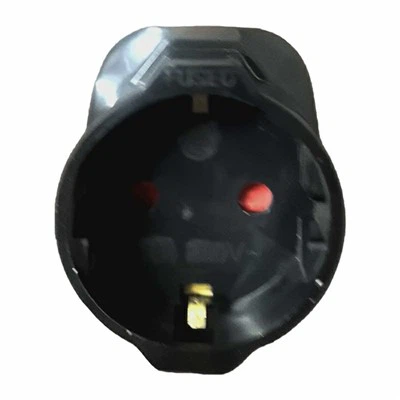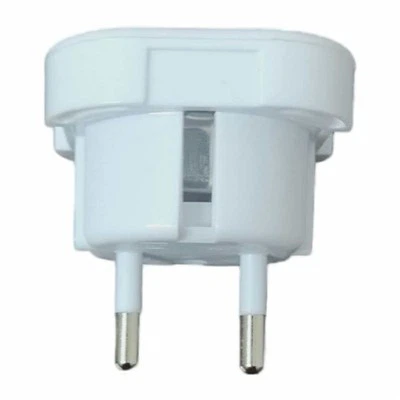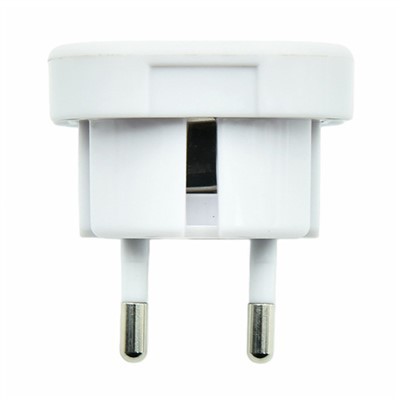
Power plugs are primarily categorized into three main types: adapter plugs, molded plugs, and assembled plugs.
Adapter Plugs: Since power plug standards vary across different countries - for instance, a plug designed for use in China cannot be used in the United States - an adapter plug is required to facilitate the conversion. This type of plug enables the conversion of a plug conforming to one country's standard into a plug conforming to another country's standard.
Molded Plugs: In this type of plug, the plug housing and the power cord are permanently bonded together using high heat and high pressure. This method ensures a robust and secure connection; indeed, over 80% of the power plugs currently found on the market belong to this category.
Assembled Plugs: Assembled plugs secure the power cord to the plug housing using fasteners such as screws. Unlike molded plugs, they can be disassembled and reassembled during use, offering a high degree of flexibility; examples of the widespread use of this type of plug can be found in the UK market.
Furthermore, power plugs are also classified based on the number of pins (or cores) they possess, falling into categories such as 2-pin, 3-pin, and multi-pin plugs. A 2-pin plug typically features two blades or pins; a 3-pin plug features three blades or pins, or two blades combined with a grounding pin; multi-pin plugs are more complex in design, with specific configurations selected based on the requirements of the connected device.