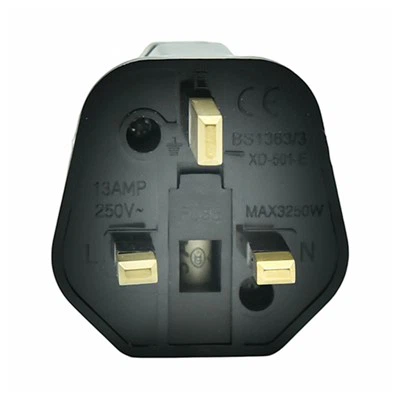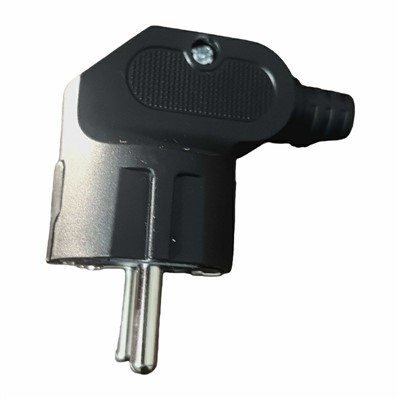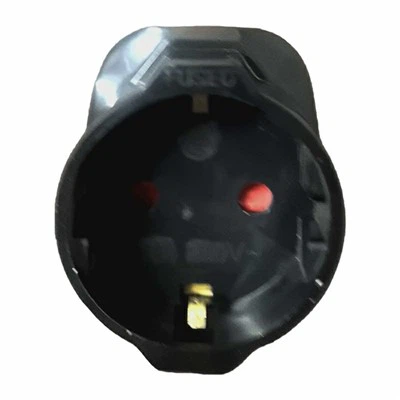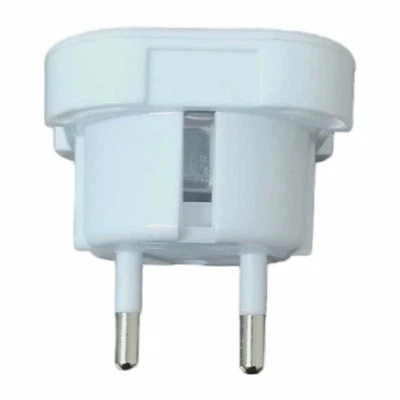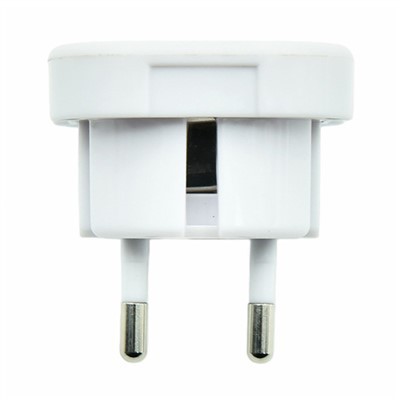
To determine whether socket accessories are compliant, the core approach is to evaluate four key indicators: certification, materials, structural design, and safety performance. A compliant socket not only ensures smooth daily electricity usage but also effectively prevents the risks of fire and electric shock.
1. Look for the Mandatory Certification Mark (CCC)
• All legitimate socket products must pass the national CCC certification (China Compulsory Certification), which serves as the most fundamental safety threshold.
• Check the product body, packaging, or instruction manual for a clear, durable "CCC" logo. You can also verify the authenticity of the certification number via the official website of the China Quality Certification Centre.
• Special Note: Sticker-style CCC logos are easily counterfeited; logos that are integrally stamped or molded into the product body are more reliable.
2. Inspect the Quality of the Casing and Internal Materials
• Casing Material: Prioritize PC flame-retardant engineering plastic (polycarbonate), which withstands temperatures exceeding 750°C and will not burn or drip when exposed to fire. Inferior products often use ABS plastic, which is prone to yellowing, deformation, or even catching fire.
• Internal Conductors: The socket contacts should be made of tin-phosphor bronze or pure copper, with a recommended thickness of ≥0.5mm. These materials offer excellent conductivity, generate minimal heat, and possess strong fatigue resistance. Avoid materials such as brass or iron, which are prone to oxidation and poor electrical contact.
• Power Cord: The wire gauge must comply with relevant standards: 10A sockets require a wire cross-section of no less than 1.0mm², while 16A sockets require no less than 1.5mm². High-quality cords feel soft yet resilient to the touch, and feature a double-layer insulation structure for enhanced safety.
3. Verify that the Structural Design Complies with New National Standards
• Safety Shutters: New national standards strictly mandate that all sockets be equipped with safety shutters (child protection gates) to prevent electric shock caused by the single-pin insertion of foreign objects. Testing Method: It should be impossible to insert an object into a single socket hole; the shutters should only open when force is applied simultaneously to both (two-pin) or all three (three-pin) contact points.
• Rational Socket Design: Avoid "universal sockets" (which accept multiple plug types), as this design often leads to poor electrical contact and arcing. Instead, choose "combination sockets" (featuring a standard 5-hole configuration) or dedicated socket types, which ensure smooth insertion and a tight, secure fit.
• Plug Insulation Sleeve: The new 2024 National Standard (GB 1002-2024) mandates that plugs be equipped with an insulation sleeve at least 0.6 mm thick to prevent accidental finger contact with the metal pins.
4. Verify Labeling Information
Compliant products must clearly display the following information in a manner that is resistant to erasure:
• Rated Voltage (e.g., 250V)
• Rated Current (10A or 16A)
• Power Type Symbol (AC: ~)
• Manufacturer Name or Trademark
• Product Model Number
• Applicable Standard Number (e.g., GB/T 2099.7-2015)
❌ If the labeling is illegible, incomplete, or contains exaggerated specifications (e.g., labeled as "2500W" but only rated for 10A), the product is highly likely to be of inferior quality.
5. Functionality and Additional Safety Features
• Overload Protection: Some high-end power strips feature an automatic power-off function; they automatically trip (cut power) when the connected load exceeds the rated capacity (e.g., 2200W for a 10A rating) to prevent overheating and fire hazards.
• Lightning and Surge Protection: Recommended for use in regions prone to frequent thunderstorms or when powering valuable electronic appliances.
• Individual Switches + USB Ports: Enhances user convenience; however, ensure that the USB output is stable and supports fast-charging protocols.