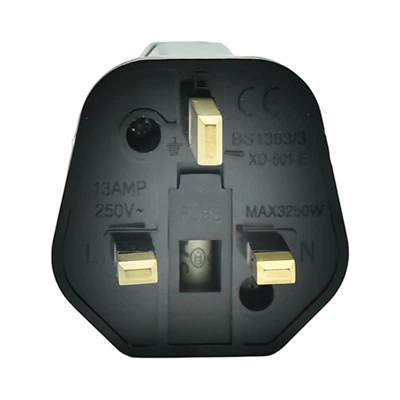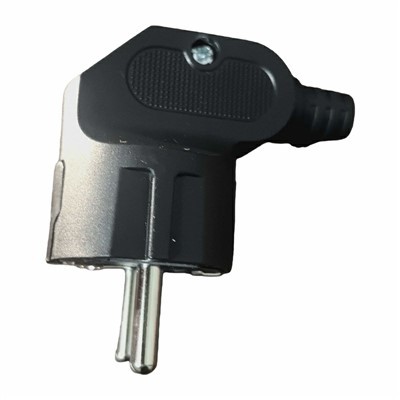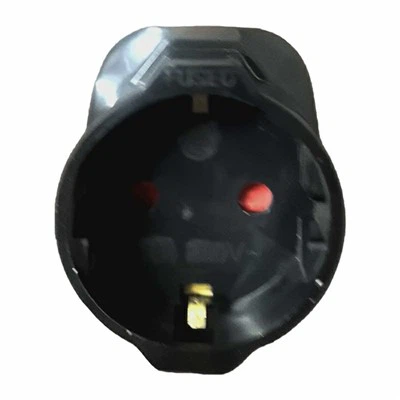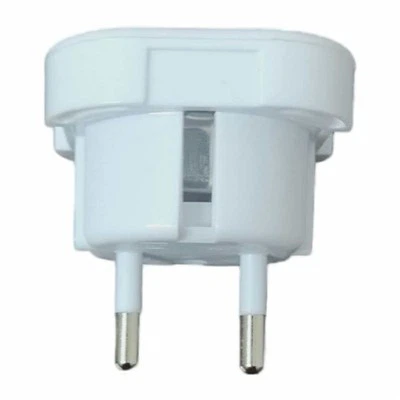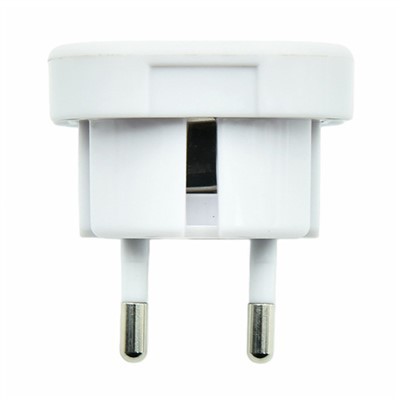
Poor quality in plugs, sockets, and adapters is a significant cause of electrical fires. Quality defects in these seemingly small components pose a serious threat to the personal safety and property of consumers. Therefore, when purchasing plugs, sockets, adapters, and switches, consumers should prioritize product safety; the primary performance indicators influencing this safety are outlined below:
**Markings**
Markings serve as a crucial guide for proper installation, usage, and maintenance, constituting an essential element of safety standards designed to safeguard both persons and property. Plugs and sockets must clearly display their rated current, rated voltage, power supply type, and other relevant information in a conspicuous location. Additionally, adapters - defined as portable electrical accessories comprising a single plug section combined with one or more socket sections - must utilize the symbol "MAX" (or "Maximum") to indicate their rated current and/or power output, thereby guiding users to avoid overloading the device. All markings and symbols must be durable, legible, and resistant to wear; markings applied via easily erasable silk-screening or paper labels are unacceptable.
**Rated Values**
Rated values represent the fundamental electrical compatibility parameters that ensure plugs, sockets, and adapters function correctly and safely in conjunction with the electrical appliances to which they are connected. For instance, the rated current of an adapter must not exceed the rated value of its plug section. Failure to adhere to this rule creates a hazard: if a user selects an appliance based solely on the higher rated current of the adapter's socket, the plug component may overheat due to excessive current flow, potentially leading to a dangerous situation. Furthermore, for adapters equipped with fuses or overload protectors, the minimum rated value of the adapter itself must correspond exactly to the rated value marked on the fuse or protector; otherwise, the device may sustain damage.
**Dimensions**
Dimensions constitute a critical technical requirement determining whether plugs, sockets, and adapters can be used safely and whether they meet universal interchangeability standards designed to prevent accidental mis-insertion. Non-compliant dimensions can hinder usability or create latent hazards-such as poor electrical contact or accidental mis-insertion - which, in less severe cases, may result in equipment damage, and in severe cases, can lead to fires or electric shock accidents.
**Protection Against Electric Shock**
Protection against electric shock is a pivotal safety indicator ensuring that plugs, sockets, and adapters do not pose a risk of electric shock to users or bystanders - not only during normal operation but also in the event of unforeseen circumstances or accidents. When a plug is fully or partially inserted into a socket, the live parts of the plug must remain inaccessible. Furthermore, no single pin of the plug shall be capable of engaging with the live contact sleeve of the socket while the other pins remain accessible. Plugs, sockets, and adapters equipped with protective shutters must be designed to prevent the insertion of single pins or probes.
**Construction**
The contact sleeve assembly within the socket must possess sufficient elasticity to ensure adequate contact pressure against the plug pins. These contact sleeves must be resistant to corrosion and abrasion to guarantee reliable electrical contact at the interface between the plug and socket. The pins of the plug must be securely fixed and non-rotatable; otherwise, insertion performance may be compromised, and safety hazards could arise. Adapters must be equipped with a flexible cord anchorage mechanism to ensure the cord is securely fastened and capable of withstanding normal tensile and torsional forces. When a plug is inserted into a socket, the mating surfaces should fit together snugly to prevent potential electric shock hazards.
**Power Cord**
The power cord must have a sufficient cross-sectional area to prevent overheating - which could damage the insulation - and thereby avert short circuits, fires, leakage currents, and subsequent accidents. For instance, the power cord for a common 250V, 10A adapter should have a cross-sectional area greater than or equal to 0.75 mm².
**Mechanical Strength**
Plugs and sockets must possess sufficient mechanical strength to withstand the various mechanical stresses - such as drops, impacts, and compression - that may occur during installation and normal use. Sockets equipped with protective shutters must be capable of preventing the insertion of a single pin.
**Heat and Fire Resistance**
High temperatures significantly impact the various properties of insulating materials. Under high-temperature conditions, the structure and characteristics of insulating materials undergo fundamental changes; these changes ultimately determine the material's reliability in application. Some materials may gradually soften and lose mechanical strength when exposed to high temperatures, thereby compromising the quality of the plug or socket as well as its safety during use. Furthermore, the insulating materials used in plugs and sockets must possess a certain degree of flame retardancy. Without this property, should the product catch fire during use, the blaze could quickly spiral out of control.