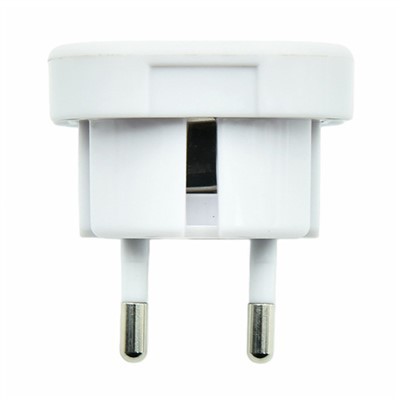
I. The Basic Forms of European Plugs
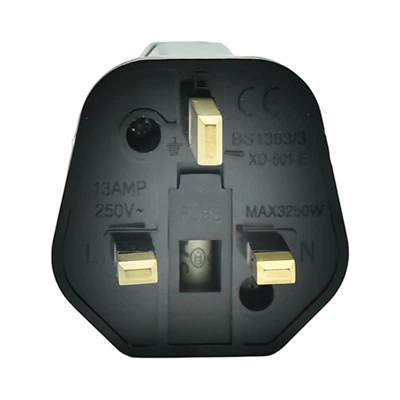
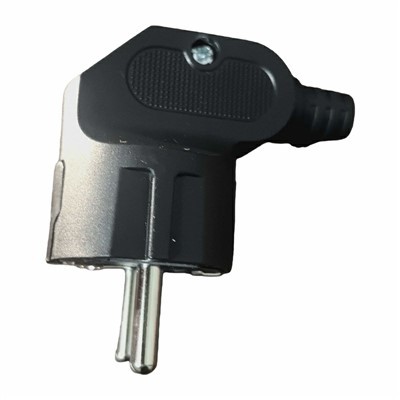
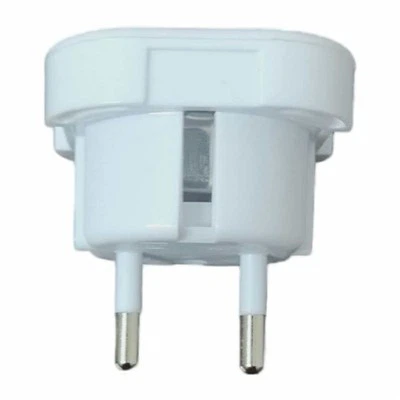
The design of European power adapter plugs is, in essence, "two-sided": it features both the classic two-round-pin configuration and a three-prong style that includes a grounding pin. Two-pin plugs are commonly found on low-power appliances (such as mobile phone chargers), whereas devices requiring grounding (such as laptop adapters) typically utilize a three-prong design featuring a metal grounding contact. Key characteristics of these plugs include a pin diameter of 4.8 mm and a center-to-center spacing of 19 mm.
II. Practical Applications of the Three-Prong Structure
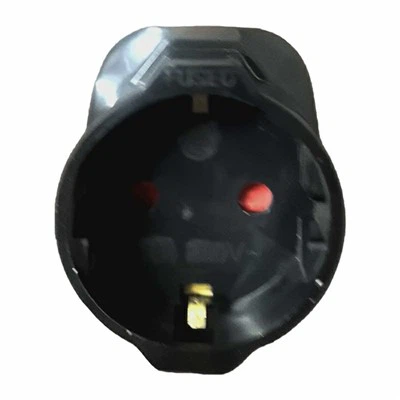
**Necessity of Grounding:** High-power appliances (exceeding 2500W) or devices with metal casings *must* use a three-prong plug, wherein the central protruding metal tab connects to the ground wire.
**Regional Variations:** Germany and France predominantly use a round-pin three-prong style; Italy utilizes three parallel cylindrical pins; and Switzerland's three pins are arranged in a diagonal pattern.
**Compatibility Design:** Some European three-prong plugs feature a retractable grounding tab; this design satisfies safety requirements while simultaneously enhancing portability.
III. Identification Tips for Travel Use
You can determine whether a plug features a three-prong design by observing its base for the presence of a T-shaped groove or metal contact points. Two-pin plugs can be made compatible with three-hole sockets via an adapter, though the grounding protection function will be rendered inactive. For high-power appliances, it is strongly recommended to prioritize the use of native three-prong plugs; furthermore, when operating devices in humid environments, ensuring reliable grounding is absolutely essential.