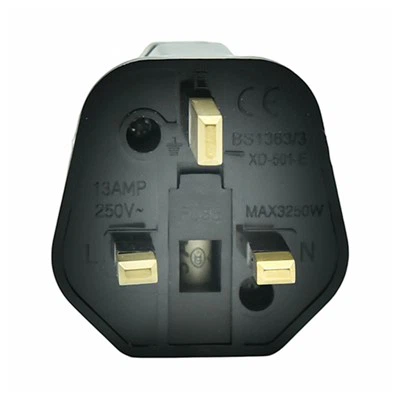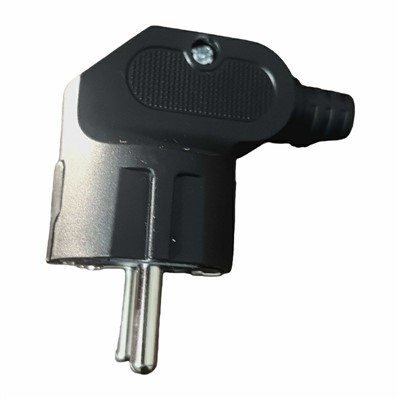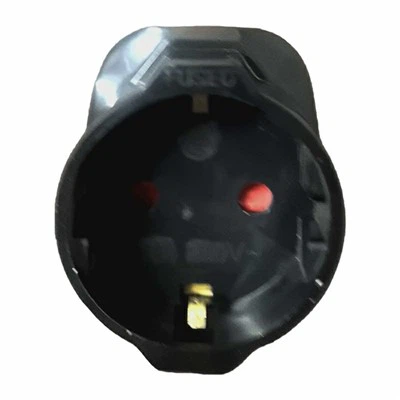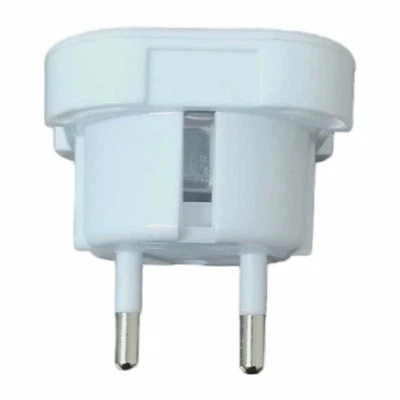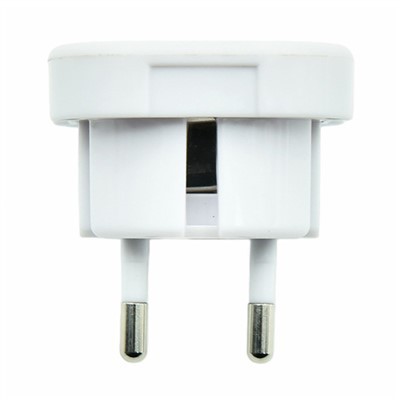
European Standard plugs and German Standard plugs exhibit significant differences in terms of physical appearance and structure, power ratings and intended uses, usage scenarios and compatibility, as well as safety features. The following outlines the key distinctions between the two:
I. Physical Appearance and Structure
• Pin Thickness:
European Standard plugs feature relatively slender pins, typically with a diameter of 4.0 mm, making them suitable for general household appliances.
German Standard plugs, conversely, feature more robust pins - generally with a diameter of 4.8 mm - enabling them to handle higher current loads.
• Grounding Design:
German Standard plugs typically incorporate a grounding function, providing an additional layer of safety protection for high-power devices.
Some types of European Standard plugs, however, lack a grounding contact; consequently, they may not offer sufficient safety protection in certain situations.
II. Power Ratings and Intended Uses
• European Standard Plugs:
Typically suited for low-load devices, such as small household appliances and electronic gadgets.
Available current ratings include 2.5A, 3A, and 10A, satisfying the basic power requirements of daily life.
• German Standard Plugs:
The optimal choice for high-power devices - particularly the 16A high-current variant-making them ideal for electrical appliances that require heavy loads.
III. Usage Scenarios and Compatibility
• European Standard Plugs:
Widely usable across numerous countries and regions throughout Europe, offering broad versatility.
Whether for large household appliances or small electronic devices, European Standard plugs can handle almost any application with ease.
• German Standard Plugs:
Extremely popular in countries such as Germany and Austria, though their overall compatibility is relatively lower. Due to their thicker pins, they may not fit into certain sockets that are designed exclusively for thinner pins.
IV. Safety Features
• European Standard Plugs:
Designed with safety in mind, incorporating features such as child-resistant shutters.
However, since some variants lack a grounding contact, using them without proper grounding may pose certain safety risks.
• German Standard Plugs:
Thanks to their grounding design, they are highly effective at preventing electrical leakage-a feature of particular importance for high-load devices.
They adhere to strict safety standards and regulations, ensuring a secure and proper fit between the plug and the socket.
In summary, European Standard plugs and German Standard plugs differ significantly across various aspects, including physical appearance and structure, power ratings and intended uses, usage scenarios and compatibility, as well as safety features. When selecting a plug, you should choose the appropriate type based on the device's power requirements, the intended usage environment, and local safety standards and regulations.