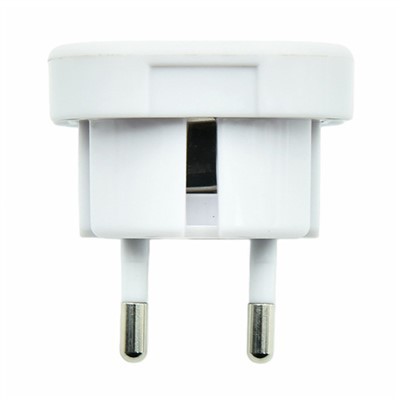
I. Choose Your Retailer Wisely
When purchasing power sockets, consumers should avoid being swayed solely by low prices. It is best to make purchases at reputable, large-scale retail chains, hypermarkets, or electronics stores, and to retain your proof of purchase.
II. Inspect the Appearance
The style and color of the switches should harmonize with the overall interior design of the room. For instance, if the dominant color scheme of the interior decor is light-toned, one should avoid selecting switches in dark colors such as black or brown. Furthermore, the packaging of compliant sockets will feature complete manufacturer and product information; conversely, the packaging of substandard sockets is often flimsy and lacks essential details-particularly the manufacturing date. Many inferior products fail to display a production date on their packaging, which is a strong indicator of a non-compliant product. Additionally, the faceplates of high-quality sockets exhibit fine craftsmanship, with no burrs or rough edges around the casing or socket openings; the dimensions of the socket holes are symmetrical and uniform. In contrast, the casings of poor-quality sockets often display coarse workmanship.
III. Assess the Tactile Quality
You can evaluate the quality of a socket through four key tactile tests: assessing its weight, repeatedly toggling the switch, testing the insertion and extraction force, and pulling on the power cord.
1. Assess the Weight: Sockets that meet national standards contain a greater quantity of copper wiring and thicker copper contacts internally, and feature sturdy plastic casings; consequently, they feel relatively heavy. Substandard sockets, having been produced using inferior materials and shortcuts, will feel noticeably lighter.
2. Toggle the Switch: Repeatedly press the socket's power switch a few times. A compliant socket will toggle smoothly and effortlessly, accompanied by a crisp, distinct clicking sound. A substandard socket, however, will feel stiff or rigid to the touch and is prone to sticking or jamming.
3. Test Insertion/Extraction Force: In a compliant socket, the force required to insert and extract a plug from each individual socket opening should feel moderate and springy; moreover, the tactile sensation should be consistent across all the openings. Substandard sockets often feel either too loose or too tight; they lack proper spring tension, are prone to becoming loose over time, and the tactile feel can vary noticeably from one socket opening to another.
4. Pull the Power Cord: The power cord of a compliant socket should feel neither too soft nor too rigid to the touch, and its connection to the socket unit should be firm and secure. Conversely, the power cord of a substandard socket often feels excessively soft and is connected insecurely to the unit, making it highly susceptible to being easily pulled out or detached.
IV. Prioritize Brand Reputation
Consumers are strongly encouraged to select products from well-known and reputable brands. This is because the quality of electrical switches and sockets directly impacts the safe and proper functioning of your appliances - and, indeed, the overall convenience and comfort of your daily life. During interviews, many distributors expressed a shared sentiment: switches and sockets produced by numerous small-scale manufacturers are highly unreliable and have an extremely short service life. Consequently, the frequent need for replacements proves to be a significant inconvenience.
V. Consider After-Sales Service
Whenever possible, purchase from specialty stores or authorized sales outlets designated by reputable manufacturers, and be sure to request a sales invoice. This ensures that you will be able to access necessary after-sales support in the future.
VI. Check for Markings
Pay close attention to the markings located on the base of the switches and sockets; these should include the "Great Wall Certification" (CCEE) mark, as well as the rated current and voltage specifications.
VII. Verify Compliance with Standards
Opt for products manufactured in accordance with the GB2099.3-2008 standard. On June 1, 2010, relevant national authorities promulgated a new national standard, which subsequently became mandatory. This standard explicitly prohibits the production of "universal sockets" (those designed to accept multiple plug types). The new standard mandates the production of sockets featuring a split configuration - where the two-pin and three-pin sockets are separated (commonly referred to as the "new five-hole socket"). This design increases the contact surface area between the plug and the socket, ensuring a tighter connection and thereby reducing the risk of electric shock hazards.