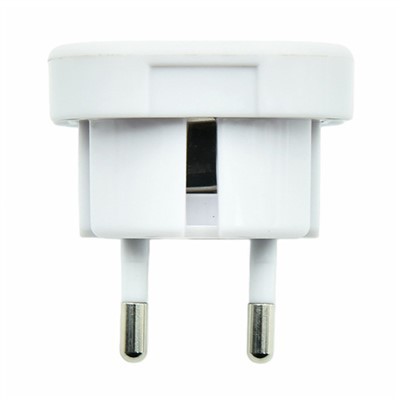
With the widespread adoption of household appliances, the number of power outlets in homes has steadily increased. However, if installed improperly, these outlets can become "hidden bombs" buried within the walls. According to relevant investigative data from the Ministry of Public Security, fires caused by short circuits in power outlets, switches, and circuit breakers have accounted for nearly 30% of all fire accidents in my country over the past decade - ranking as the leading cause among all types of fires.
**Placement Too Low**
When installing outlets, many households place them in low, inconspicuous locations because they feel that placing them too high detracts from the room's aesthetics. However, Dr. Xia Dong of the Institute of Electrical Engineering at the Chinese Academy of Sciences points out that this practice makes it easy for water to splash into the outlets while mopping, potentially leading to electrical leakage accidents. Industry regulations stipulate that surface-mounted outlets should ideally be installed no less than 1.8 meters above the floor, while flush-mounted outlets should be no less than 0.3 meters above the floor. Outlets in kitchens and bathrooms should be positioned at least 1.5 meters above the floor, and outlets for air conditioners should be at least 2 meters high.
**Haphazard Installation**
Power wiring must utilize copper conductors with an appropriate cross-sectional area. If you reside in an older home, it is imperative to replace any existing aluminum wiring with copper wiring. This is because aluminum oxidizes very easily, making the connection points prone to sparking. Studies have shown that the rate of electrical fires in homes wired with aluminum is dozens of times higher than in those wired with copper. Additionally, for aesthetic reasons, many households opt for concealed wiring methods-such as embedding wires in wall grooves or laying them through hidden conduits. Dr. Xia Dong advises that during wiring, one must strictly adhere to the principle of "connecting the live wire to the switch and the neutral wire to the light fixture." Furthermore, outlets should be equipped with leakage protection devices.
**Lack of Protection**
Kitchens and bathrooms are frequently exposed to water and grease-laden fumes; therefore, it is highly recommended to install splash-proof covers or plastic shields over the outlet faceplates in these areas.
Additionally, some renovation contractors, when installing three-pin outlets, often render the ground wire effectively useless - or even worse - directly connect the ground wire to the gas piping. Experts warn that these practices are extremely dangerous; the ground wire is designed to connect to the appliance's metal casing so that, in the event of an electrical fault or leakage, the current is safely diverted to the ground, thereby preventing electric shock to anyone touching the appliance.
**Shared Outlets**
Sharing a single outlet among multiple devices can cause appliances to operate under an excessive load, thereby triggering a fire. High-power appliances-such as air conditioners, washing machines, and range hoods - should ideally be connected to dedicated, independent outlets. Generally speaking, it is best to install four sets of outlets in a bedroom; in the living room, there should be one set for every 2.5 square meters, and in the kitchen, one set for every 1.2 square meters.
**Insufficient Circuits**
Older homes often feature only a single electrical circuit; consequently, if a short circuit occurs in any line, the entire room's power supply will be completely paralyzed. As a general rule, it is advisable to allocate two or three separate circuits for outlets - dedicating one circuit each to the kitchen and bathroom, and reserving a separate circuit specifically for air conditioners.
**Adherence to Obsolete National Standards**
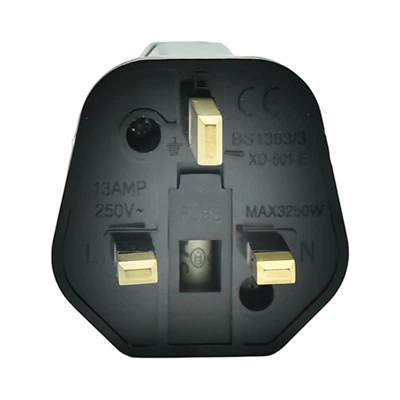
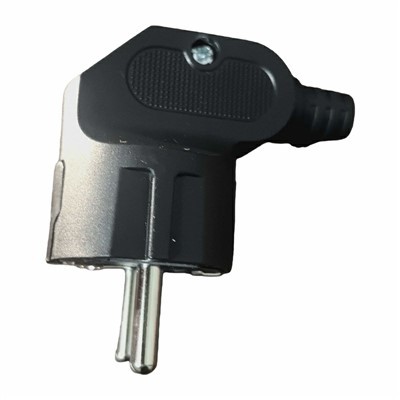
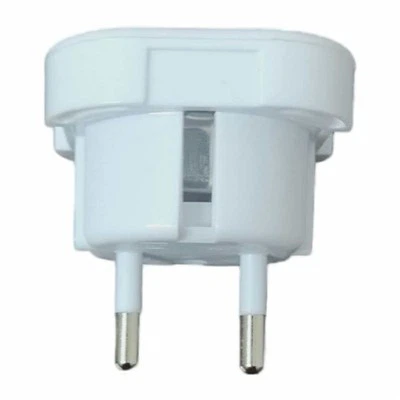
"Universal-socket" outlets - those designed to accommodate two-prong or three-prong plugs simultaneously, or even non-standard plugs such as British, American, or European types - pose a significant safety risk. Because the receptacle openings on these outlets are relatively large, the contact area between the outlet's internal contact blades and the appliance's plug pins is often insufficient. This poor contact can easily cause the internal blades to overheat, potentially leading to a fire.
Two-core outlets are relatively easy to identify by their physical appearance: any power strip or outlet unit that features a three-prong receptacle on its face but is equipped with only a two-prong plug on its own power cord is a problematic two-core device. These outlets lack a dedicated ground wire; consequently, if an internal insulation component within an appliance fails during operation, electrical current can flow across the entire surface of the appliance. Since the two-core outlet cannot channel this stray current safely into the ground, it creates an extremely high risk of electric shock.